


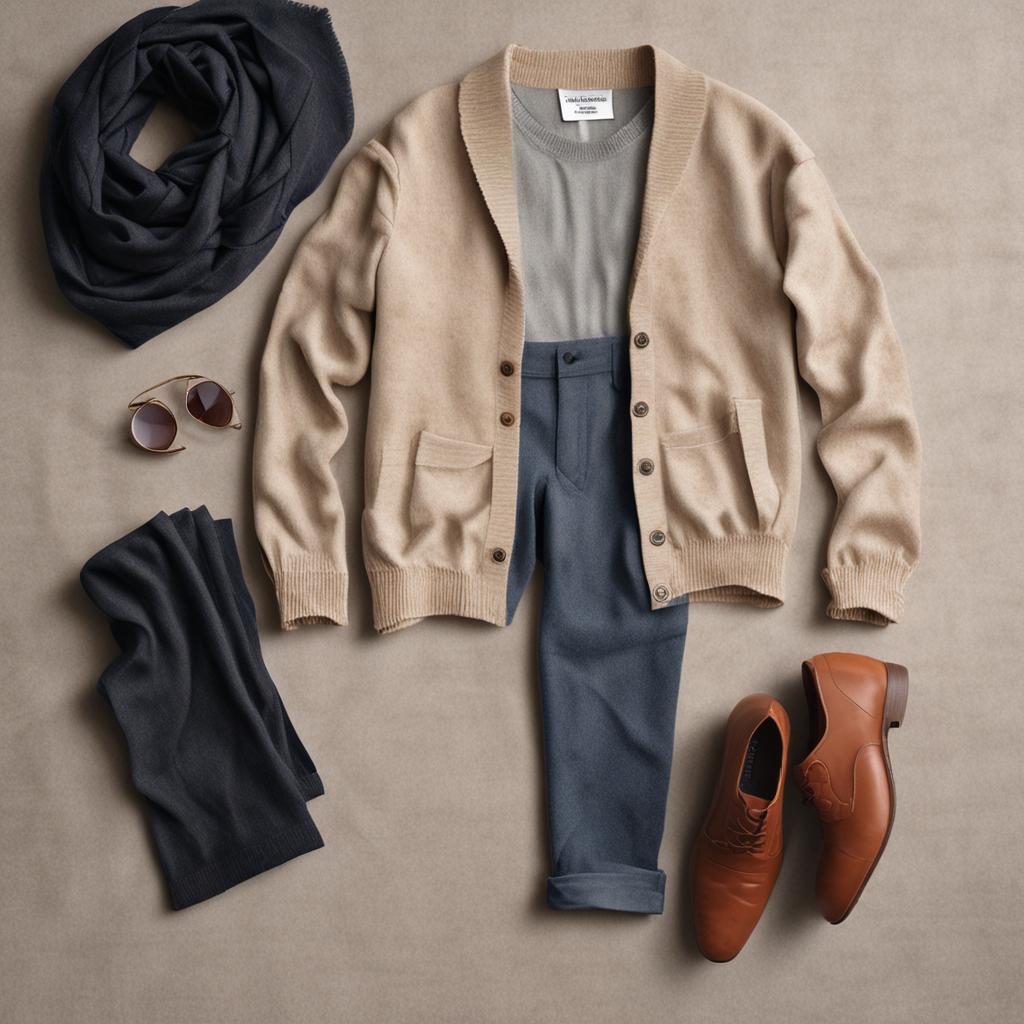
What you wear on a 12-hour flight affects how you sleep, how you feel on arrival, and — occasionally — whether you're considered for an operational upgrade. This is the practical UK guide to dressing for business class: what actually works, what to avoid, and the details most guides miss.
The short answer: Smart casual, in soft natural fabrics, with layers. Think well-cut trousers or dark jeans, a merino or cotton knit, a cardigan or unstructured jacket, and slip-on shoes. If your airline provides pyjamas — most long-haul business cabins now do — you're really only dressing for boarding, the lounge and arrival, which changes everything about how you should pack.
There's no enforced dress code in business class. Airlines won't turn you away for wearing tracksuit bottoms. But there are two practical reasons to think about it properly: comfort over a very long flight in a cabin with unusual temperature and humidity, and the reality that on a UK long-haul you'll spend time in a premium lounge, possibly meet people, and step off into a completely different climate. Here's how to get all of that right.
First, Check Whether You Get Pyjamas — It Changes Everything
This is the single most useful thing to establish before you pack, and most guides skip it entirely. On long-haul routes, many airlines now provide proper sleepwear or loungewear in business class — Qatar Airways, Emirates, Singapore Airlines and others hand them out on overnight sectors, usually along with an amenity kit and slippers.
If pyjamas are provided, your travel outfit is doing a much smaller job. You only need to look and feel good for boarding, the lounge, and the final hour before landing. That frees you to prioritise presentability over sleep comfort in what you wear, because you'll change into the airline's sleepwear once you're cruising. If they're not provided — more common on shorter long-haul like transatlantic daytime flights — your outfit has to do both jobs, and soft, sleep-friendly fabrics matter much more.
Provision varies by airline, route and even sector length, so it's worth confirming when you book. It's one of the practical details a specialist will tell you as a matter of course.
The Cabin Reality: Cold, Dry, and Changeable
Cabins are usually kept cooler than most people expect, and crews often drop the temperature further once the lights go down for the sleep service. Cabin air is also extremely dry — far drier than anywhere you'd normally spend twelve hours. Two practical consequences:
- You will be cold at some point. Even with a duvet, a layer you can pull on — a cardigan, a soft jacket, a pashmina — is genuinely necessary rather than optional.
- Synthetics feel worse in dry air. Natural, breathable fabrics — merino, cotton, linen blends, silk — regulate temperature far better and don't hold odour on a long sector. Merino in particular is the long-haul traveller's secret: warm when cold, breathable when warm, and it resists creasing.
The other half of the temperature problem is uniquely British: you're often boarding in a cold, wet UK winter and landing somewhere hot. Layering solves this — a coat you can stow, a mid-layer you can shed, and a base layer that works alone in a warm arrivals hall.
What to Wear: The Practical Breakdown
Bottoms
The most important garment, because you'll be sitting, reclining and sleeping in them. Look for stretch, a soft waistband, and fabric that doesn't crease badly:
- Wool-blend or stretch-cotton trousers — smart, comfortable, travel exceptionally well
- Chinos in a soft weave
- Dark, well-cut jeans with stretch (rigid, tight denim is the classic mistake — restrictive and unforgiving after eight hours)
- Tailored joggers or elevated loungewear, if cut smartly enough for the lounge
Tops
A breathable base layer plus something you can add or remove. A fine merino knit, a cotton or bamboo t-shirt, a soft shirt or a lightweight jumper all work. Avoid anything with a stiff collar or rigid structure — you'll want to sleep in or under it. Avoid tight waistbands, restrictive necklines and anything that creases the moment you sit down.
The layer that does the heavy lifting
A cardigan, unstructured blazer, or an oversized scarf or pashmina. The pashmina is the most versatile item you can carry: a blanket when the cabin is cold, a rolled neck pillow, a light eye shade, and a smart accessory when you land. If you carry only one extra piece, make it this.
Footwear and socks
Slip-on shoes are the clear winner — easy at security, easy to remove at your seat, easy to put back on for the arrivals queue when your feet have swollen slightly (which they will on a long flight). Loafers, soft leather trainers or smart slip-ons all work. Avoid tight boots and complicated laces.
Bring proper socks even if the airline provides slippers, and consider compression socks on any flight over eight hours. They're not glamorous, but they improve circulation and reduce swelling on long sectors — a genuine health consideration on ultra-long routes to Australia or the Far East, not just a comfort one. Anyone with existing circulation concerns should speak to their GP before a very long flight.
What Not to Wear
- Rigid, tight denim. The most common regret. Fine for a two-hour hop, punishing over twelve.
- Anything that creases badly. Linen shirts and unstructured cotton look terrible after a long sector — you'll disembark looking like you slept in a hedge.
- Bulky jewellery. Beyond comfort, there's a specific business class hazard here: dropped items can fall into the seat mechanism, and moving a lie-flat seat with something jammed in it can crush it. If you drop a phone, earring or ring into the seat, ask the crew rather than operating the seat yourself.
- Complicated footwear. Knee-high boots and multi-buckle shoes are a nuisance at security and at your seat.
- Heavy fragrance. A shared cabin for twelve hours; strong scent is genuinely antisocial in a confined premium cabin.
- Too much skin. Beachwear, very short shorts and vest tops feel out of place in a premium cabin and lounge, and leave you cold once the temperature drops.
Does Dressing Well Get You an Upgrade?
The honest answer: not really — but it doesn't hurt. Operational upgrades are driven overwhelmingly by loyalty status, fare class and whether the cabin is oversold, not by what you're wearing. Anyone promising that a blazer will get you into first class is selling a myth.
That said, on the rare occasions when a gate or check-in agent has genuine discretion about who to move, presenting as calm, polite and appropriately dressed does you no harm at all. Treat it as a small tiebreaker, not a strategy. If you actually want a reliable route into a better cabin, book a private business class fare — a far more dependable method than hoping for a wardrobe-based miracle.
Dressing for the Ground: Lounges and Arrival
Business class from the UK means lounge time at both ends, and that's where your outfit is most visible. Premium lounges at Heathrow and other major hubs are relaxed but professional spaces — smart casual fits perfectly, and you'll feel more comfortable there in something presentable than in obvious sleepwear.
The other trick worth knowing: many premium lounges, including arrivals lounges at some airports, offer showers. If you're landing early morning and heading straight into a day, packing a fresh top and clean underwear in your hand luggage lets you shower and change on arrival, transforming how you feel. Business class travellers routinely underuse this facility — it's one of the most valuable things included in the fare, especially if you're arriving in Dubai, Singapore or Doha with a connection to make.
A Sample Outfit for a UK Long-Haul Departure
Putting it together for, say, an evening departure from Heathrow to Sydney in the UK winter:
- Base: soft cotton or merino t-shirt
- Mid: fine merino knit or soft shirt
- Bottoms: stretch wool-blend trousers or dark stretch jeans
- Layer: cardigan or unstructured jacket, plus a pashmina
- Feet: slip-on loafers, good socks, compression socks in the bag
- Coat: a warm outer layer for the UK, stowable on board
- In hand luggage: fresh top, clean underwear, toothbrush, moisturiser and lip balm for the dry cabin air
Board looking smart, change into the airline's pyjamas after dinner, sleep properly across the long sector, then shower and change into your fresh top before landing. That sequence is how experienced long-haul travellers step off a 22-hour journey looking like they've had an ordinary night's sleep.
Planning a long-haul trip?
We'll tell you which airlines provide pyjamas and amenity kits on your route, which lounges have showers, and quote a private business class fare you won't find online. ATOL 10713 · IATA accredited.
Get a business class quote →Arrive comfortable — and pay less to do it
Travel Business First holds private business class fares worldwide. Dubai from £1,385, Tokyo from £2,531, Sydney from £3,152 return. ATOL 10713 · IATA accredited.
Request your quoteRelated Reading
External references: NHS: avoiding DVT when flying · ATOL protection (CAA) · IATA
What to Wear on a Long-Haul Business Class Flight: The Complete UK Guide — FAQs
Prefer to talk? 0203 727 6360.
Is there a dress code for business class?
No airline enforces a strict dress code in business class, but smart casual is the accepted norm. You will feel more comfortable in the lounge and cabin dressed neatly than in obvious sleepwear or beachwear.
Can I wear jeans in business class?
Yes. Dark, well-cut jeans with some stretch are perfectly acceptable and look smart. Avoid rigid, tight denim, which becomes genuinely uncomfortable over a long flight.
Do airlines give you pyjamas in business class?
Many do on long-haul overnight sectors, including Qatar Airways, Emirates and Singapore Airlines, usually with an amenity kit and slippers. Provision varies by airline, route and sector length, so check when booking.
Should I wear compression socks on a long-haul flight?
They are worth considering on flights over eight hours as they support circulation and reduce swelling. If you have existing circulation concerns, speak to your GP before a very long flight.
Does dressing smartly get you a free upgrade?
Not meaningfully. Upgrades are driven by loyalty status, fare class and cabin loads. Dressing well and being polite may act as a small tiebreaker when an agent has discretion, but it is not a strategy.
What's the best fabric to fly in?
Natural, breathable fabrics such as merino wool, cotton, silk and soft blends. Merino is especially good on long-haul as it regulates temperature, resists creasing and does not hold odour.